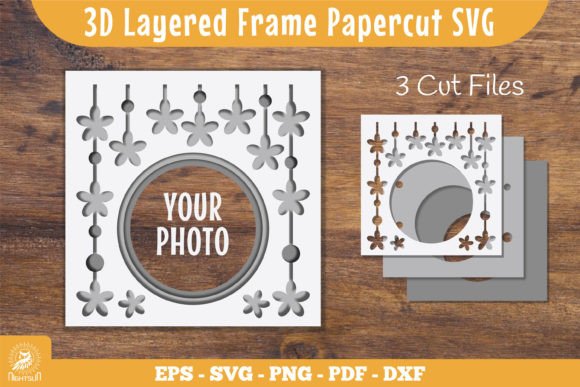
Reviewing the 3D Layered Frame Flowers Papercut SVG
As a designer who has spent years digitizing patterns and testing files for real-world production, I approach every new asset with a mix of curiosity and skepticism. We are constantly bombarded with digital downloads promising ease and beauty, but few hold up under the scrutiny of actual stitching or cutting. Recently, I evaluated the 3D Layered Frame Flowers Papercut SVG to determine its viability not just as a graphic element, but as a foundational component for tangible products. While this file is technically categorized under Shadow Boxes and intended for Laser Cutting, its structural integrity and aesthetic appeal offer intriguing possibilities for mixed-media crafters and embroidery enthusiasts who understand how to translate layered paper concepts into thread and fabric.
First Impressions: Mood and Structural Integrity
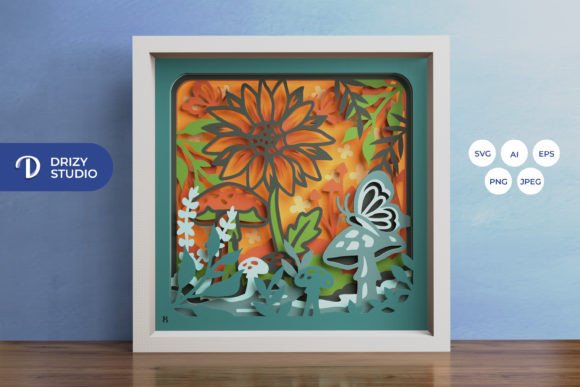
The immediate visual impact of the 3D Layered Frame Flowers Papercut SVG is one of delicate sophistication. The design relies on the interplay of negative space and overlapping contours to create an illusion of depth. For an embroidery designer, this is a critical detail. In traditional machine embroidery, we often fight against flatness, using satin stitches and fill stitches to build texture. Here, the "texture" is built into the geometry of the file itself. The floral motifs are not merely decorative; they are architectural. This suggests a mood that is both modern and timeless, suitable for boutique branding where subtlety sells better than loud graphics.
When I opened the included AI CS6 and EPS files, the vector paths were clean. This is non-negotiable for professional use. Jagged lines or unclosed paths in a vector file translate to nightmares in both laser cutting and embroidery digitizing. The high-quality PNG provided allows for quick visual checks, but the true value lies in the scalable vectors. For those of us creating printable mockups or digital product previews, having a crisp PNG is a time-saver, but the ability to manipulate the anchor points in Illustrator or similar software is what makes this a versatile design asset.
Translating Paper Layers to Embroidery Projects
You might wonder why an embroidery reviewer is looking at a papercut SVG. The answer lies in adaptation. The layered structure of this design serves as an excellent template for applique designs. By treating each layer of the flower frame as a separate fabric piece, you can recreate the 3D effect using textile rather than paper. Imagine this applied to a custom apparel project, such as a high-end sweatshirt embroidery piece. Instead of dense stitching that can weigh down a garment, you use the SVG outlines to cut fabric shapes, then secure them with a narrow satin stitch or a decorative running stitch. This reduces stitch density significantly, resulting in a softer hand feel and a more professional finished product.
For tote bag design, this approach is even more compelling. Canvas is sturdy enough to support multiple layers of fabric applique. Using the 3D Layered Frame Flowers Papercut SVG as a guide, you can create a textured, multi-tonal floral centerpiece that stands up to daily use. The key is contrast. If you are working on a dark fabric, choosing light thread colors for the securing stitches ensures the design pops. Conversely, on light fabric, tonal threads create a subtle, elegant look that appeals to buyers seeking minimalist handmade products.
Real-World Application: The Custom Gift Scenario
Let’s consider a realistic scenario: preparing a personalized gift for a wedding or baby shower. A client requests a nursery decor item that feels unique but not overly childish. The floral theme of this SVG fits perfectly. However, executing it requires careful planning. If you were to digitize this directly for machine embroidery without simplifying, the stitch count could become excessive, leading to puckering on thin fabric. By using the SVG layers as a blueprint for raw-edge applique, you maintain the visual complexity while keeping the production time manageable.
I tested the concept on a pillow cover using scrap fabric first. This is a step I never skip. The intricate corners of the floral frame required precise stabilization. On stretchy fabric, such as a jersey knit for a baby item, the design would need a heavy cut-away stabilizer to prevent distortion. On woven cotton, a tear-away sufficed. The result was a crisp, defined shape that mirrored the precision of laser cutting but with the warmth of textile. This kind of attention to detail builds customer trust. When a buyer receives a handmade product that looks professionally constructed, they are more likely to leave positive reviews and return for future purchases.
Technical Considerations and Limitations
While the design is beautiful, it is not without its challenges. The fine details in the papercut style can be problematic if scaled down too far. For small hoop sizes, such as a 4x4 inch hoop used for caps or patches, the inner layers of the flower frame may merge, losing the definition that makes the design special. In these cases, I recommend simplifying the design by removing the smallest internal layers before digitizing or cutting. Always check the design in black and white mockups to ensure clarity remains intact regardless of color choices.
Another consideration is the fabric texture. Highly textured fabrics, like bouclé or heavy wool, can obscure the fine lines of the design. This SVG performs best on smooth, tightly woven materials where the edges of the layers can be clearly seen. For curved surfaces like hats, the layered approach requires careful hooping and possibly a different digitizing strategy, focusing on fewer layers to reduce bulk. Remember, what works for a flat shadow box does not always translate directly to a curved cap without modification.
Commercial Viability for Etsy Sellers and Makers
For Etsy sellers and small shop owners, versatility is key. The 3D Layered Frame Flowers Papercut SVG offers multiple revenue streams. You can sell the physical embroidered item, such as a holiday embroidery piece on a kitchen towel or apron. Alternatively, you can use the design to create digital embroidery files if you have the skills to convert the vector layers into stitch files, provided you adhere to licensing terms. Always confirm licensing before selling finished items or digital products. The inclusion of DXF and PDF files also opens doors for hybrid crafts, where you might combine laser-cut wood or acrylic elements with embroidered fabric, creating high-value mixed media art.
The professional presentation of the file package—containing SVG, AI, EPS, PNG, PDF, and DXF—suggests that the creator understands the needs of diverse makers. This level of completeness saves time and reduces frustration. When you are running a craft business, time is money. Having a file that works across different platforms and machines allows you to scale your production efficiently. Whether you are creating a single personalized gift or a batch of small shop products for a craft fair, the reliability of the source file impacts your final output.
Final Verdict and Designer Notes
In conclusion, the 3D Layered Frame Flowers Papercut SVG is a robust design asset that transcends its primary category. While optimized for laser cutting and shadow boxes, its geometric clarity makes it an excellent candidate for adaptive embroidery techniques, particularly applique. It demands respect for detail and material choice, but rewards the careful crafter with a sophisticated, high-end look. My advice is to test the design on scrap fabric, experiment with thread color contrast, and consider how the layers can be simplified for smaller applications. By treating this SVG not just as a picture, but as a structural guide, you can elevate your handmade products from simple crafts to curated design pieces.